OpenAI vs. Claude vs. DeepSeek vs. Llama: Why Enterprise AI Architectures Must Be Model Agnostic
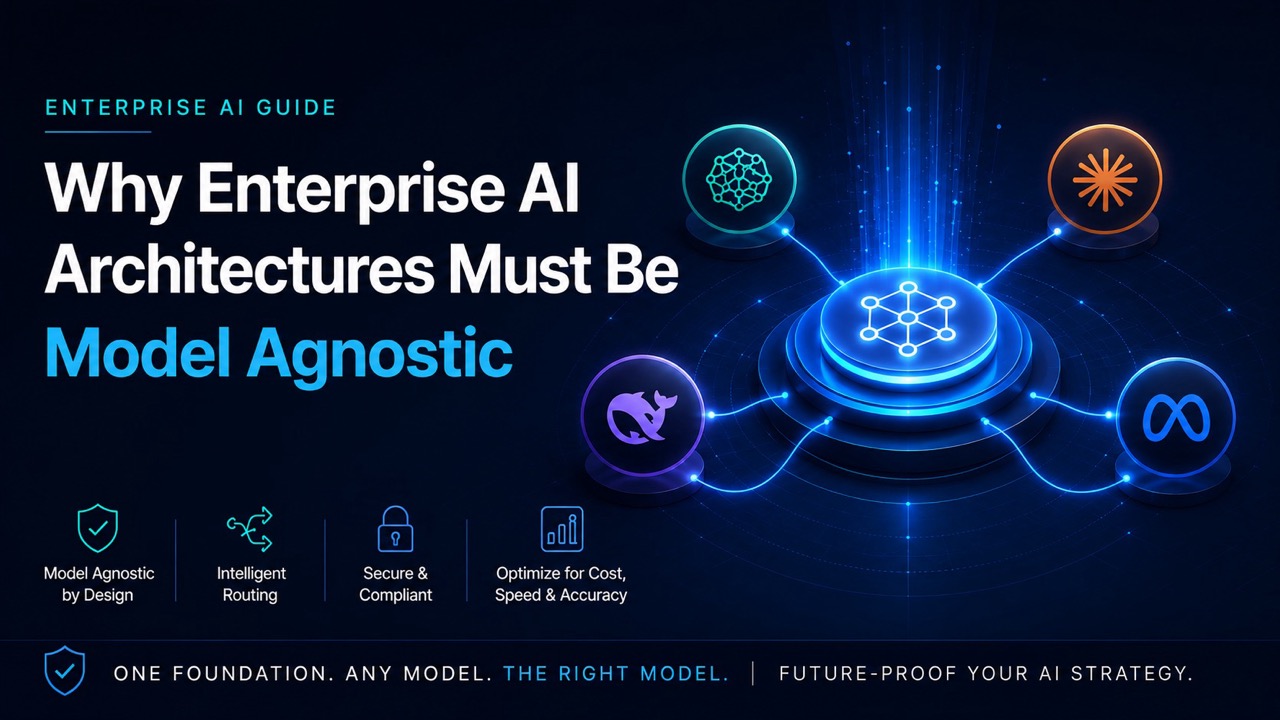
Every quarter, a new foundation model benchmark lands and reshuffles the leaderboard. In early 2024, OpenAI's GPT-4 was the default standard for enterprise pilots. By late 2024, Anthropic's Claude 3.5 Sonnet became widely favored for complex code generation, long-context analysis, and structured reasoning. Shortly after, DeepSeek-V3 demonstrated that Mixture-of-Experts (MoE) architectures could deliver high-level reasoning performance often at a fraction of the cost of leading proprietary models, depending on hosting infrastructure, deployment model, and provider pricing. Meanwhile, Meta's Llama 3.3 70B gave enterprises full data sovereignty to deploy state-of-the-art models on their own private cloud infrastructure.
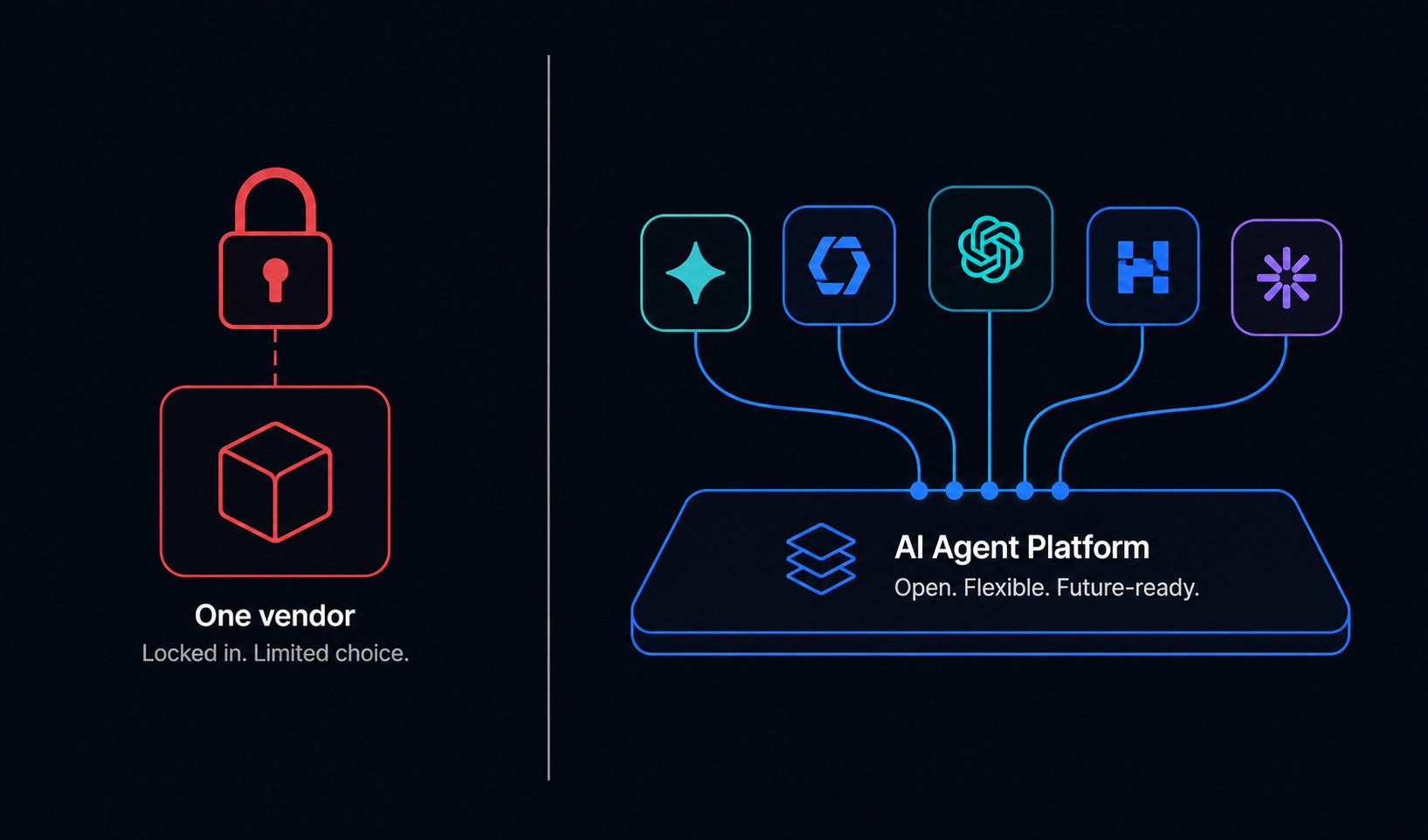
If your enterprise infrastructure is hardcoded to a single LLM vendor, your system is already accumulating architectural debt.
The reality of modern enterprise AI is clear: no single model provider wins on speed, unit economics, security, and reasoning accuracy across every enterprise workload. Tying your agent workflows, RAG pipelines, and automated business processes to a single vendor is the enterprise equivalent of locking your entire cloud stack into a single proprietary data center vendor in 2010.
In this guide, we provide a detailed comparison of today's top four foundation model ecosystems, evaluate their real-world trade-offs, explain the 12 parameters of multi-model routing, and outline how to build an agnostic enterprise orchestration layer.
Direct Comparison: OpenAI vs. Claude vs. DeepSeek vs. Llama
Enterprise buyers searching for an LLM evaluation often look for absolute winners. However, in production engineering, models must be chosen based on workload fit, compliance constraints, and operational trade-offs.
Note: Representative capabilities at the time of writing. Model performance, pricing tiers, and hosted SLAs vary by model version, cloud provider, and deployment environment.
| Model Ecosystem | Primary Strengths | Limitations & Trade-offs | Ideal Enterprise Workloads | Less Ideal Workloads |
|---|---|---|---|---|
| OpenAI (GPT-4o / o3 Series) | General-purpose agent execution, function calling & tool-use reliability, vision OCR, ecosystem tooling (Azure OpenAI) | Higher token cost for simple, high-frequency classification or summarization workloads | Multi-step agent tool calling, structured JSON output generation, multimodal document processing | Bulk background data extraction where open-weights or MoE models offer far better unit economics |
| Anthropic (Claude 3.5 Sonnet) | Exceptional long-context reasoning, multi-file code synthesis, policy/legal document analysis, technical writing | Provider API schemas differ slightly from OpenAI standards, requiring abstraction adapters | Complex code refactoring, multi-page legal & compliance auditing, long-document RAG comprehension | Simple single-turn classification where lightweight edge models are faster and cheaper |
| DeepSeek (V3 / R1) | High-efficiency Mixture-of-Experts (MoE) architecture, math & logic processing, cost-effective scaling | Hosted enterprise SLA availability, enterprise support, and compliance guarantees may vary by provider | High-volume batch text processing, analytical data extraction, cost-sensitive hybrid RAG | Real-time sub-second edge lookups if hosted on high-latency external endpoints without local caching |
| Meta (Llama 3.3 70B / 405B) | Full data sovereignty, zero external data egress, complete private VPC & on-premises deployment | Requires internal MLOps/DevOps expertise to host, scale, and optimize infrastructure (vLLM, TGI) | Air-gapped regulated environments (healthcare, defense, banking), custom domain fine-tuning | Engineering teams without dedicated GPU infrastructure management capacity |
Detailed Model Breakdown
1. OpenAI (GPT-4o, o3-mini)
- Typical Strengths: OpenAI remains an industry reference point for tool-use reliability, structured JSON schema compliance, and vision-based document processing. Its broad availability on Azure OpenAI provides enterprise compliance frameworks (HIPAA, SOC2) out of the box.
- Key Weaknesses: For high-volume, low-complexity tasks (such as simple categorizations or basic sentiment extraction), using top-tier frontier endpoints can incur unnecessarily high API bills compared to specialized or self-hosted alternatives.
- Best Workloads: Complex multi-tool agent execution, vision OCR parsing, and systems heavily integrated into the Azure ecosystem.
- When Not to Use: Simple, high-throughput text processing where lower-cost MoE or open-weight models deliver identical accuracy.
2. Anthropic (Claude 3.5 Sonnet, Haiku)
- Typical Strengths: Claude is widely recognized for superior long-context retention, nuanced technical writing, multi-file codebase reasoning, and multi-page contract analysis. It exhibits lower hallucination rates when analyzing dense legal and technical documentation.
- Key Weaknesses: Integrating Claude alongside OpenAI models requires a unified middleware abstraction layer to handle minor payload syntax differences (e.g., system prompt formatting and tool definition schemas).
- Best Workloads: Codebase refactoring, automated security audits, long-document contract reviews, and multi-agent supervisory roles.
- When Not to Use: Lightweight, ultra-fast edge lookups where sub-100ms latency is mandatory.
3. DeepSeek (V3, R1)
- Typical Strengths: DeepSeek's Mixture-of-Experts (MoE) architecture demonstrates that specialized, sparsely activated models can achieve high-level mathematical, logical, and code processing while significantly optimizing compute overhead.
- Key Weaknesses: Enterprise governance, data residency guarantees, and dedicated uptime SLAs depend heavily on whether you access DeepSeek via third-party cloud aggregators, managed hosting providers, or self-hosted instances.
- Best Workloads: High-volume data parsing, analytical transformations, bulk document extraction, and cost-sensitive RAG indexing.
- When Not to Use: Workloads requiring strict US-only data residency unless deployed on approved, verified cloud infrastructure.
4. Meta (Llama 3.3 70B, 405B)
- Typical Strengths: As an open-weights model, Llama provides complete operational independence. Organizations can fine-tune, quantize, and host Llama on private cloud infrastructure (AWS EC2, GCP, Azure, or on-premises GPU clusters) with zero data leaving the company perimeter.
- Key Weaknesses: Deploying Llama at scale requires dedicated MLOps resources to manage GPU provisioning, inference servers (vLLM, TensorRT-LLM), auto-scaling, and load balancing.
- Best Workloads: Air-gapped environments, strict regulatory compliance (defense, core banking, medical records), and custom domain-tuned agents.
- When Not to Use: Early-stage pilots or small teams that prefer fully managed API endpoints over infrastructure management.
The Hidden Risks of Single-Vendor Lock-In
Hardcoding an enterprise application to a single LLM vendor creates three major operational risks:
1. Uncontrolled API Cost Accumulation
In many enterprise workloads, a significant portion of incoming prompts consist of simple data retrieval, formatting, or routing tasks. Sending these routine requests to expensive top-tier endpoints can burn significantly more API budget than required. Implementing dynamic model routing allows organizations to direct routine prompts to lower-cost models while reserving frontier models for complex reasoning.
2. SLA & Rate Limit Vulnerability
When a single LLM provider experiences unexpected latency spikes, API rate limits, or service degradation during peak business hours, single-vendor applications stall. A model-agnostic layer implements automatic circuit breakers, failing over seamlessly to secondary model providers to maintain uptime guarantees.
3. Compliance & Data Sovereignty Boundaries
Global organizations operating under GDPR, HIPAA, or regional data sovereignty mandates cannot route sensitive customer data to unapproved third-party APIs. A multi-model architecture allows sensitive PII requests to be processed locally via private Llama instances while non-sensitive public queries are processed via public cloud endpoints.
12 Parameters of Enterprise LLM Routing
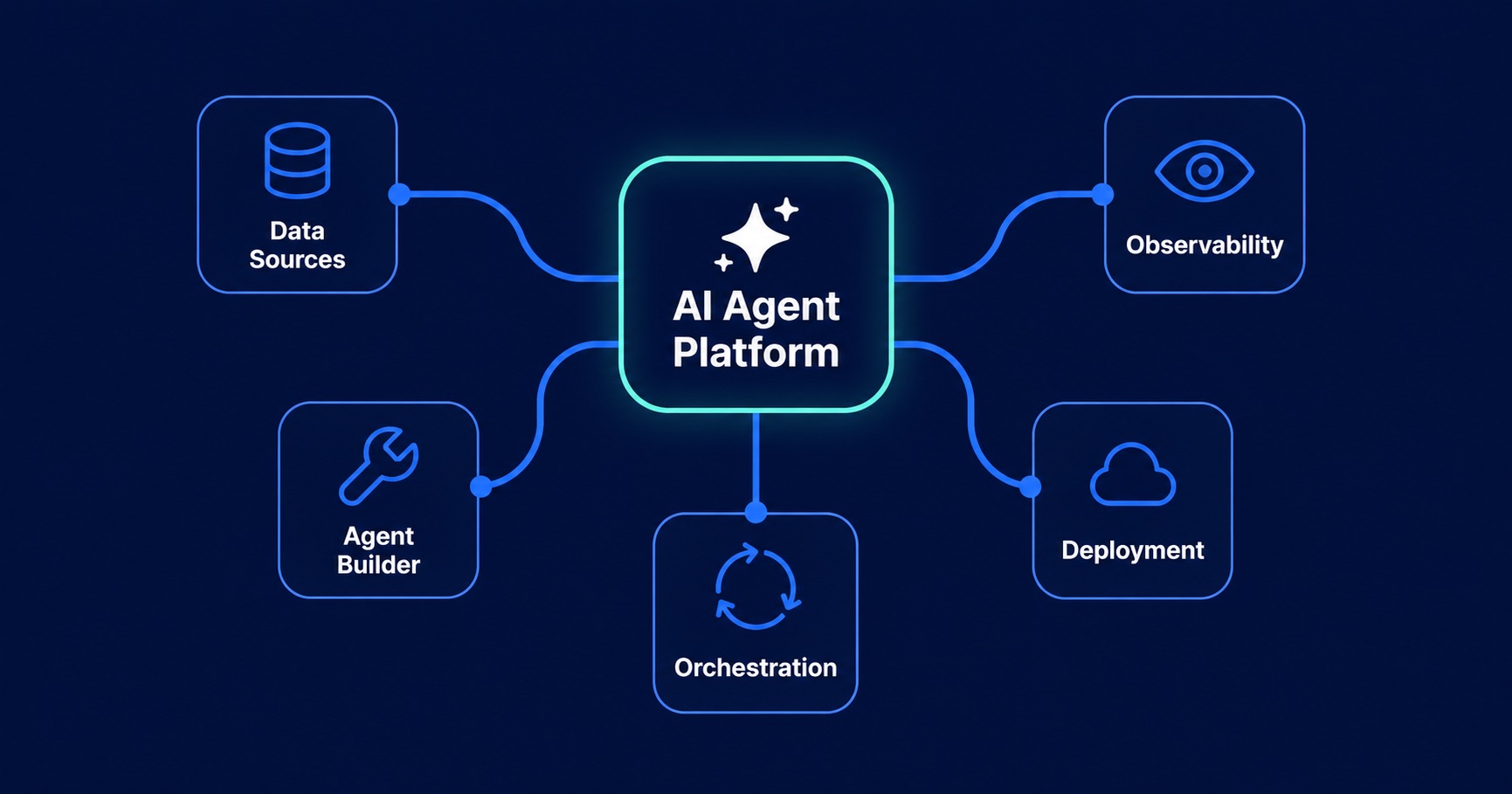
Modern enterprise routing goes far beyond simple cost-versus-speed trade-offs. A production-grade orchestration engine like RHA One evaluates up to 12 dynamic parameters before dispatching a request:
12 Dynamic Request Routing Parameters Evaluated Per Call
Architectural Implementation: Fallback Routing in Code
Here is a simplified architectural example showing how an enterprise gateway inspects query parameters and executes failover logic across model providers:
interface EnterpriseRouteRequest {
  prompt: string;
  containsPII: boolean;
  requiredCapability: "code_synthesis" | "fast_rag" | "structured_tool_use";
  latencyTargetMs?: number;
}

async function routeEnterprisePayload(req: EnterpriseRouteRequest) {
  // 1. Data Sovereignty Gate: PII payloads routed to private VPC model
  if (req.containsPII) {
    return await executePrivateModel(req.prompt, {
      endpoint: "https://llama-vpc.internal.enterprise.com/v1",
      provider: "meta-llama-3.3-70b",
    });
  }

  // 2. Code & Complex Reasoning Gate: Route to Claude with failover
  if (req.requiredCapability === "code_synthesis") {
    try {
      return await executeClaudeSonnet(req.prompt);
    } catch (err) {
      console.warn(
        "Primary endpoint unavailable. Executing failover to GPT-4o...",
      );
      return await executeGPT4o(req.prompt);
    }
  }

  // 3. High-Volume RAG Gate: Route to DeepSeek with failover
  if (req.requiredCapability === "fast_rag") {
    try {
      return await executeDeepSeekV3(req.prompt);
    } catch (err) {
      console.warn(
        "Primary RAG endpoint rate-limited. Executing failover to Llama...",
      );
      return await executePrivateModel(req.prompt);
    }
  }

  // Default execution route
  return await executeGPT4o(req.prompt);
}
Ready to see this in action?
Book a 30-minute demo with the RHA OneAI team.
4 Steps to Build a Future-Proof LLM Infrastructure
- 1Adopt a Standardized Gateway Interface: Deploy a unified proxy layer that normalizes requests across OpenAI, Anthropic, Google, and self-hosted endpoints.
- 2Decouple Prompts from Vendor Syntax: Maintain prompt templates in a central repository that dynamically maps payloads to vendor-specific API formats.
- 3Implement Edge Semantic Caching: Serve recurring enterprise queries from an in-memory cache to reduce redundant API calls and lower response times.
- 4Establish Continuous Telemetry & Auditing: Track token consumption, error rates, and latency per department to maintain cost visibility.
Conclusion: Adaptability is the Key to Long-Term AI ROI
The foundation model ecosystem will continue to evolve rapidly. Tomorrow's leading architecture might come from new Mixture-of-Experts designs, specialized domain models, or open-weights models.
Organizations that lock themselves into a single model vendor will spend engineering resources continuously re-architecting their integration stack. Organizations that deploy a model-agnostic orchestration layer like RHA One can instantly adapt to new models, optimize token costs, and maintain high system reliability.